Fil:Kinema-Junpo-1966-February-Special-3.jpg



Beskrivelse
| Beskrivelse |
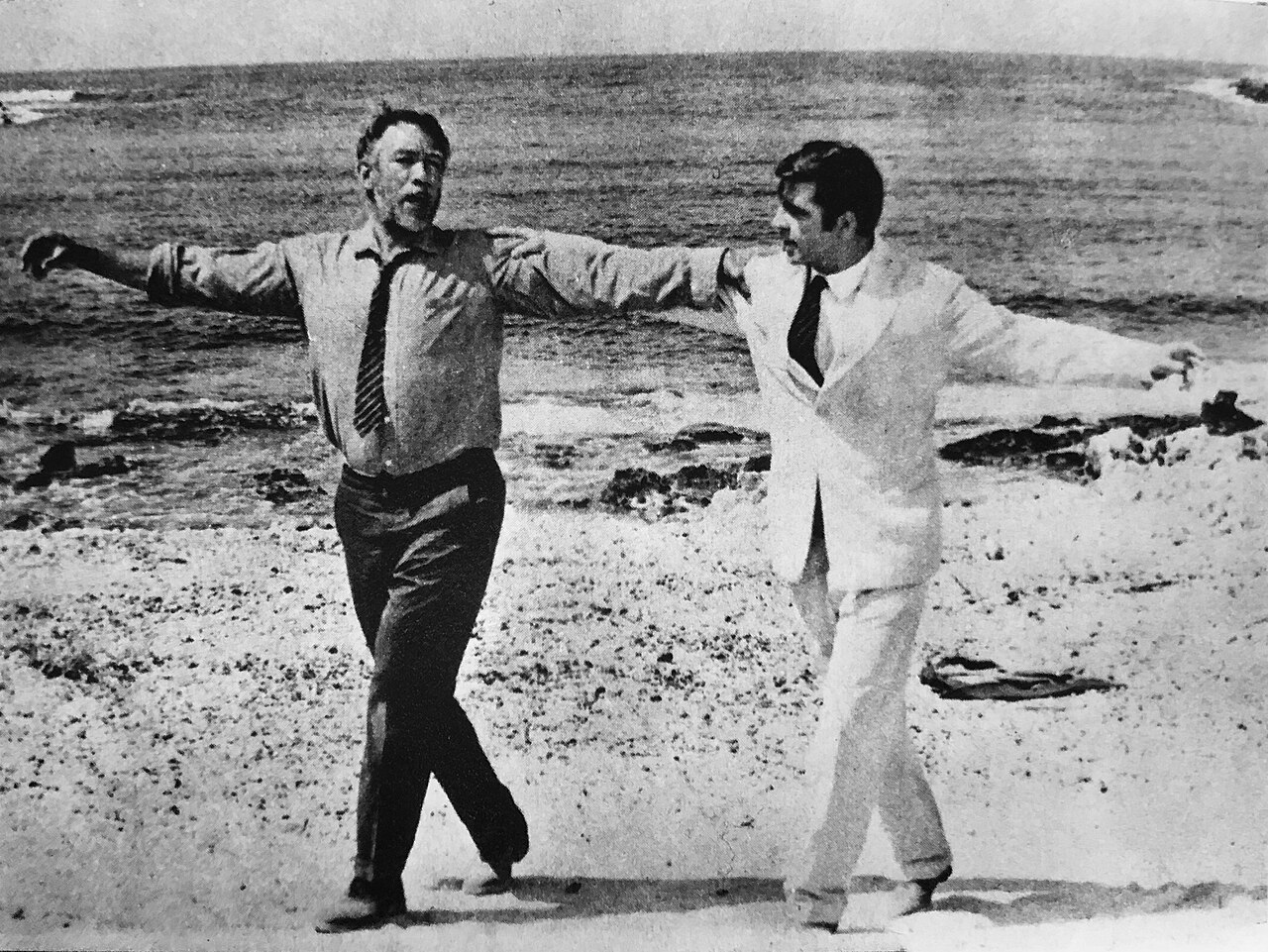
English: "Zorba the Greek"
日本語: 『その男ゾルバ』 |
| Dato | Ukjent dato |
| Kilde |
『キネマ旬報』1966年2月決算特別号。 "Kinema Junpo", Special February 1966 issue. |
| Opphavsperson | キネマ旬報社 |
Lisensiering

|
This file may not have the correct information on its copyright status.
The reason given by the user who added this tag is: This is a derivative work of a UK/Greek/US film, so {{PD-Japan-organization}} is not applicable.
Notify the uploader with:
Items tagged with this template are sorted into Category:Items with disputed copyright information.
|


|
According to Japanese Copyright Law (June 1, 2018 grant), the work is now in the public domain in Japan because the copyrights of the works in names of organizations, in Japan expire in 50 years after the publication, or in 50 years after the creation if the works are not published within 50 years after the creation (article 53).
To uploader: Please provide a name of organization and year of publication and source.
Note: The enforcement of the revised Copyright Act on December 30, 2018 extended the copyright term of works whose copyright was valid on that day to 70 years. Do not use this template for works published after 1967. Please note that being in the public domain in Japan does not automatically mean that it is free as well in the United States. Find and add one of the PD US license tags in order to ensure that the file is free in the United States. Typically, for a published work to be in the public domain in the United States, it needs to be published before 1946, because of URAA-restored copyrights. Unpublished works need to satisfy {{PD-US-unpublished}}.
|

|
Filhistorikk
Klikk på et tidspunkt for å vise filen slik den var på det tidspunktet.
| Dato/klokkeslett | Miniatyrbilde | Dimensjoner | Bruker | Kommentar | |
|---|---|---|---|---|---|
| nåværende | 4. aug. 2023 kl. 02:53 | | 3 384 × 2 540 (2 MB) | wikimediacommons>Evelyn-rose | Uploaded a work by キネマ旬報社 from キネマ旬報 with UploadWizard |
Filbruk
Den følgende siden bruker denne filen:
